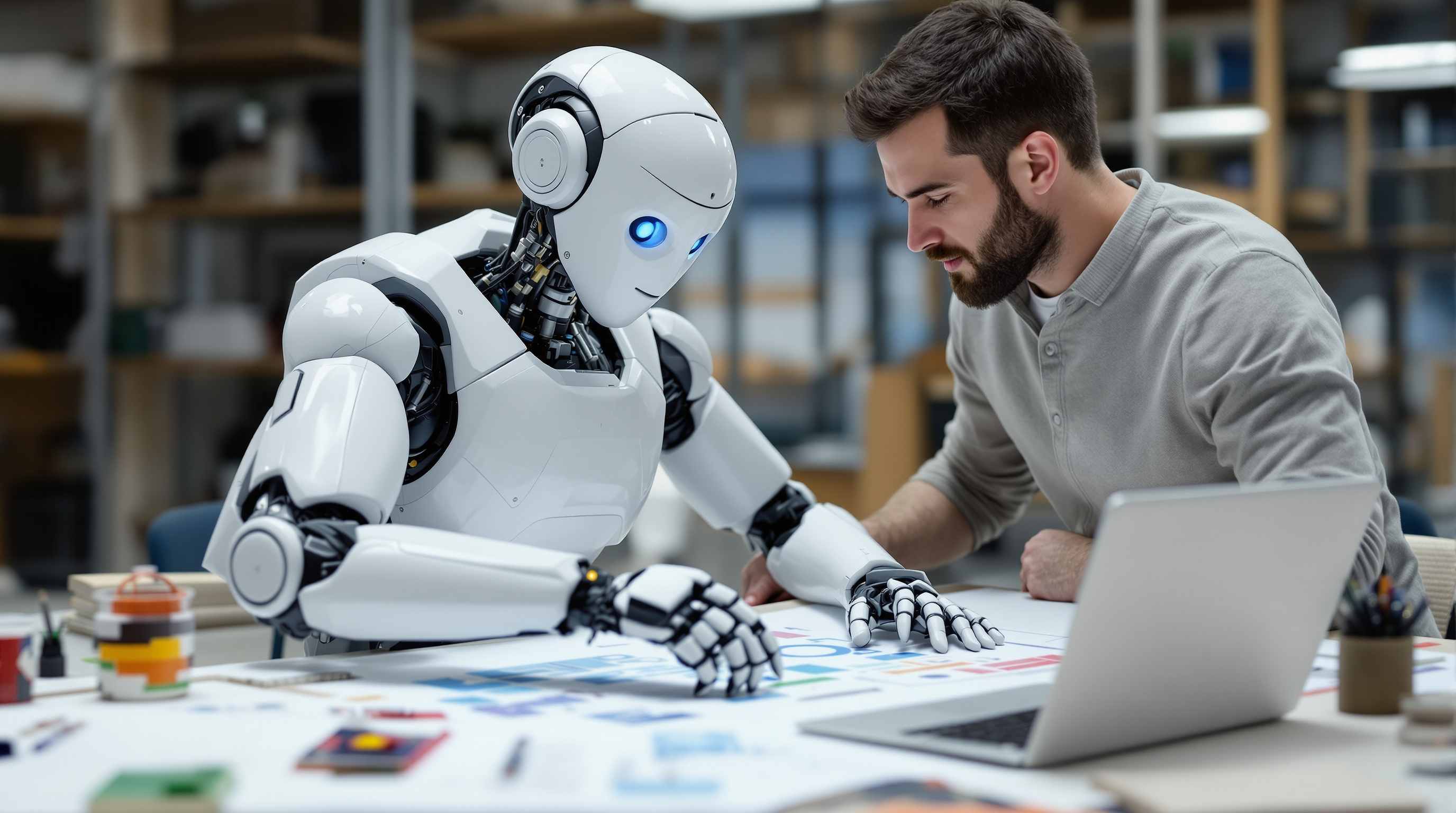
Artificial intelligence has become the new obsession in every boardroom conversation about delivery.
Depending on who you ask, it’s either the dawn of hyper-efficiency or the end of the project manager altogether.
Both are wrong.
AI will profoundly change project management, but not by removing the human from the equation. It will expose what should never have been mistaken for the job in the first place.
The real opportunity is not to resist AI, but to actively embrace it – to use it as leverage to free up the one thing that’s always in short supply in delivery: time to lead.
The Automation Mirage
Let’s start with the myth that AI will replace project managers.
That argument only holds if you think project management equals reporting, scheduling, and updating documents.
And yes, AI can do those things spectacularly well – it already is:
- Automated Risk analysis that surfaces interdependencies across portfolios.
- Predictive analytics that forecast cost, resource, and schedule variance before it happens.
- Generative models that produce first-draft charters, stakeholder maps, or even full business cases.
All of this is positive. It strips away the administrative load that clogs a PM’s day.
But automation is not management.
It’s preparation.
Management begins when judgement, influence, and leadership enter the room.
What AI Will Change
AI will fundamentally alter how project work is executed – across insight, knowledge, and governance.
1. Risk Intelligence, Not Risk Logs
In my article “Risks – One Log to Rule Them All”, I argued that risks, dependencies, constraints, and assumptions are facets of a single concept: potential threats to delivery.
AI can now scan entire portfolios, detect patterns across these categories, and re-classify them dynamically.
Instead of static logs that age badly, we’ll have living risk ecosystems – continuously recalculated and ranked based on fresh data.
The PM’s role will shift from manually maintaining spreadsheets to interpreting and communicating the data’s implications for decision-making and stakeholders.
2. Lessons That Learn Themselves
In “Lessons Learnt – From Eulogy to Intelligence”, I pointed out that end-of-project reviews are often too late and too shallow.
AI fixes that.
By monitoring delivery data in real time, AI can extract recurring themes, automatically link them to similar historical projects, and surface preventative recommendations before the next issue appears.
Lessons will no longer gather dust in SharePoint; they’ll surface precisely when they’re needed.
3. Intelligent PMOs
The modern PMO can integrate AI into governance frameworks to provide predictive health scores, automated reporting, and compliance alerts.
This transforms oversight from a passive review process into an active assurance system that identifies issues long before escalation.
4. Knowledge and Context on Demand
LLMs can act as digital PMO assistants – surfacing templates, framework guidance, and precedent documents instantly.
That means less time hunting for artefacts and more time engaging with teams, sponsors, and clients on outcomes.
5. Human Capacity Expansion
AI will become a silent member of every delivery team, running simulations, preparing briefings, and testing assumptions in the background.
Project managers who learn how to co-work with AI will achieve a kind of augmented bandwidth – able to do more, think faster, and lead deeper.
What AI Will Not Change
But for all its power, AI can’t replicate the one variable that defines delivery success: people.
1. Negotiation and Influence
No algorithm can detect the politics behind a polite “noted.”
AI can summarise sentiment, but it can’t persuade, reassure, or rebuild trust. That’s human territory.
2. Leadership and Morale
Delivery isn’t a data problem – it’s a people problem.
AI doesn’t calm a team when scope changes mid-sprint, or mediate between departments fighting over resources. That still requires empathy, credibility, and courage.
3. Ethics and Accountability
Project success isn’t just delivery to time and budget – it’s delivery that’s right for the business and for people.
When AI recommends a cost-cutting path that harms long-term value, a human still decides what matters.
AI can inform; only humans can own.
4. Culture and Change
Every project shifts culture. AI might identify resistance, but only a leader can help a team move through it.
Change management, communication, and stakeholder engagement remain intrinsically human disciplines – and ironically, more important as automation spreads.
The New Professional Divide
AI will not replace project managers, but it will expose who the real ones are.
Those who rely purely on templates, processes, and governance checklists will see their roles shrink fast.
Those who lead with curiosity, context, and communication will see their own expand.
The profession is divided into two groups:
- Task Managers, who let AI replace them.
- Strategic Leaders who let AI empower them.
The future belongs to the second group.
From Frameworks to Foresight
Professional frameworks – APM, PMI, PRINCE2, PM² – are not at risk of obsolescence; they’re at the heart of what AI will reinforce.
These frameworks codify professional discipline, ethics, and accountability – exactly what AI cannot replicate.
AI will enhance its application by embedding predictive oversight and consistent decision logic into governance models.
But those frameworks still require trained professionals to interpret, challenge, and apply them effectively.
AI will make good PMOs exceptional, and weak PMOs painfully visible.
What Project Managers Should Do Now
Three actions stand out for PMs and PMOs ready to move forward:
- Embrace AI Actively, Not Passively
Stop waiting for permission. Use AI tools to automate reporting, risk formatting, lessons capture, and communications.
Every administrative task automated is another hour gained for leadership, change management, and team support. - Develop AI Literacy
Understand prompt engineering, bias, and validation. Know how your tools generate insights – and when to challenge them. - Protect the Human Edge
Your emotional intelligence, ethical reasoning, and ability to unite people around purpose are now your sharpest differentiators.
Nurture them. AI can’t.
The Real Change
AI won’t end project management.
It will clarify what project management truly is.
The PM of the near future will not spend their week formatting slide decks or reconciling logs.
They’ll lead transformation, coach teams, and guide sponsors – supported by an intelligent digital partner handling the mechanics.
AI is not the enemy of professionalism. It’s the catalyst for better professionalism – one that frees PMs to do the work only humans can: inspire, decide, and deliver.


Leave a Reply